Modular Furniture: The Complete Guide to Smart, Flexible, and Modern Living Spaces
Modern homes are changing rapidly. Living spaces are becoming smarter, apartments are getting more compact, and homeowners are searching for practical solutions that combine beauty with functionality. One of the biggest trends transforming interior design today is modular furniture.
Unlike traditional furniture pieces that come in fixed shapes and sizes, modular furniture is designed with flexibility in mind. It consists of independent sections or modules that can be arranged, expanded, or customized according to your needs. Whether you live in a compact apartment, a large family home, or even a studio space, modular furniture creates an opportunity to maximize every square foot efficiently.
Today’s homeowners want more than beautiful interiors. They want adaptable spaces that evolve with lifestyle changes, work-from-home routines, family growth, and personal preferences. Modular systems provide exactly that balance.
This complete guide explores everything you need to know about modular furniture, from its benefits and types to design ideas and purchasing recommendations.
What Is Modular Furniture?
Modular furniture refers to furniture designed in separate sections or components that can be arranged or reconfigured in different ways.
Instead of purchasing one fixed unit, modular systems allow homeowners to customize layouts according to their available space and requirements.
Examples include:
- Modular sofas
- Modular kitchen cabinets
- Storage systems
- Modular wardrobes
- Bedroom sets
- Home office setups
- Entertainment units
Each component functions independently but works together as a complete design system.
For example, a modular sofa may include:
- Corner units
- Middle sections
- Recliners
- Ottomans
- Storage pieces
These individual pieces can be rearranged whenever desired.
Why Modular Furniture Is Becoming Popular
The popularity of modular furniture continues growing because people increasingly prioritize flexibility and practicality.
Several factors drive this trend:
Smaller Urban Spaces
Modern city apartments often have limited floor areas. Traditional bulky furniture may consume valuable space, while modular systems are specifically designed for compact living.
Work-From-Home Lifestyle
Remote work has transformed homes into multifunctional environments. Rooms now serve multiple purposes:
- Office
- Bedroom
- Study area
- Entertainment zone
Modular pieces adapt easily to these changing needs.
Customization Demand
Consumers increasingly want personalized interiors instead of mass-produced solutions.
Modular furniture allows homeowners to:
- Choose layouts
- Select colors
- Add features
- Upgrade components
Long-Term Investment
Because modular systems can expand or change, homeowners avoid replacing entire furniture sets.
Major Benefits of Modular Furniture
1. Space Optimization
One of the biggest advantages is efficient use of available space.
Modular systems are designed to fit precisely into:
- Corners
- Small rooms
- Irregular spaces
- Studio apartments
Built-in storage options also reduce clutter.
2. Flexibility
Life changes constantly.
You may:
- Move homes
- Add family members
- Change room functions
- Renovate spaces
Modular furniture adjusts accordingly.
3. Easy Transportation
Traditional furniture often creates challenges during relocation.
Modular pieces:
- Separate into smaller components
- Move easily
- Reduce transportation costs
- Simplify installation
4. Custom Appearance
Every home has unique design preferences.
Modular furniture provides options for:
- Colors
- Materials
- Finishes
- Layout combinations
5. Cost Efficiency
Initially, modular solutions may seem expensive.
However, over time they reduce expenses because:
- Components can be replaced individually
- Expansions are easier
- Full furniture replacement becomes unnecessary
6. Better Organization
Many modular systems include:
- Hidden compartments
- Shelves
- Drawers
- Multipurpose features
This creates cleaner and more organized spaces.
Types of Modular Furniture
Modular Sofas
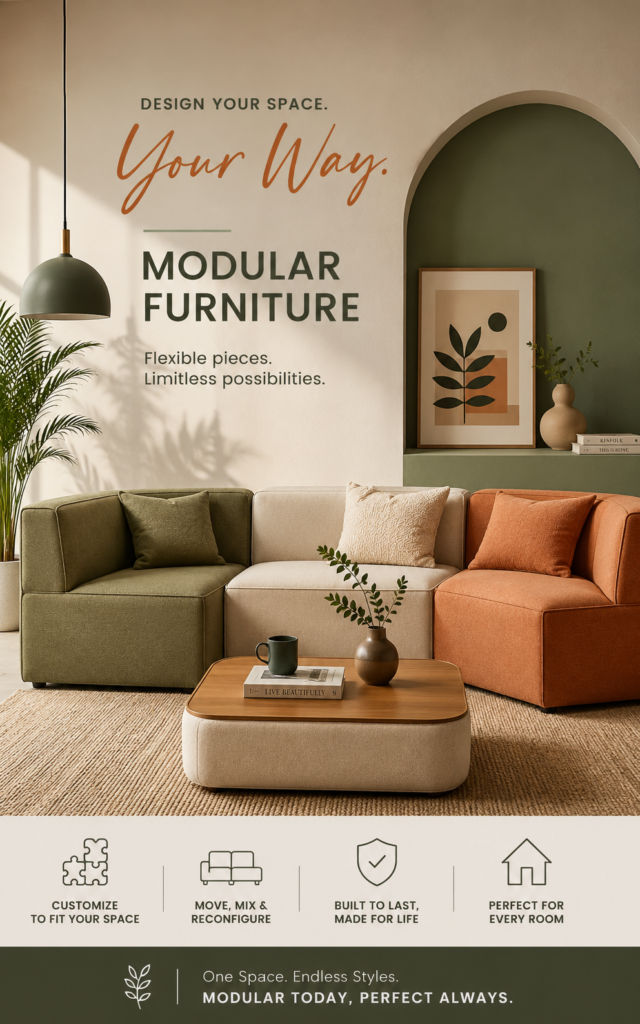
Modular sofas are among the most popular options.
Features include:
- Rearrangement flexibility
- Expandable seating
- Storage compartments
- Convertible designs
Popular layouts include:
- L-shape
- U-shape
- Sectional arrangements
These sofas work particularly well in:
- Family rooms
- Apartments
- Open-plan homes
Modular Kitchens
Modern kitchens increasingly rely on modular systems.
Benefits include:
- Better workflow
- Efficient storage
- Modern appearance
- Custom sizing
Common components:
- Cabinets
- Pull-out drawers
- Pantry sections
- Corner storage
- Appliance units
Modular Bedroom Furniture
Bedrooms benefit significantly from modular solutions.
Examples include:
- Wardrobes
- Bed storage systems
- Side tables
- Study sections
- Dressing units
Modern designs often include under-bed storage and wall-mounted elements.
Modular Office Furniture
Remote work environments require adaptability.
Modular office furniture may include:
- Adjustable desks
- Storage shelves
- Mobile cabinets
- Workstations
These systems support productivity without occupying excessive space.
Modular Storage Units
Storage systems can transform any room.
Popular choices include:
- Wall shelving
- Cube organizers
- Bookcases
- Entertainment centers
Users can add or remove sections whenever needed.
Best Materials Used in Modular Furniture
Material selection affects durability, appearance, and maintenance.
Solid Wood
Advantages:
- Strong
- Long-lasting
- Premium appearance
Disadvantages:
- Expensive
- Heavy
Engineered Wood
Advantages:
- Affordable
- Lightweight
- Versatile
Disadvantages:
- Lower durability than solid wood
Metal
Advantages:
- Modern appearance
- High strength
- Minimal maintenance
Disadvantages:
- Can feel industrial
Glass
Advantages:
- Elegant
- Creates visual openness
Disadvantages:
- Requires regular cleaning
Upholstery Materials
Popular options:
- Leather
- Velvet
- Linen
- Cotton
- Performance fabric
Selection depends on lifestyle and maintenance preferences.
How to Choose the Right Modular Furniture
Measure Space Carefully
Before purchasing:
- Measure room dimensions
- Note doorways
- Check ceiling height
- Identify movement areas
Proper measurements prevent fitting issues.
Define Your Purpose
Ask questions:
- Is storage the priority?
- Is seating important?
- Will furniture serve multiple functions?
Understanding needs simplifies selection.
Match Interior Style
Furniture should complement your home’s design theme.
Examples:
Minimalist style
- Neutral colors
- Clean lines
- Simple shapes
Industrial style
- Metal frames
- Dark finishes
- Rustic textures
Scandinavian style
- Light wood
- White colors
- Functional simplicity
Consider Future Needs
Think long term.
Possible changes include:
- Family growth
- Relocation
- Home renovation
- Work requirements
Choose systems that expand easily.
Modular Furniture Ideas for Small Spaces
Wall Beds
Wall beds fold away when not used.
Benefits:
- Save floor space
- Create multifunctional rooms
- Ideal for studio apartments
Storage Ottomans
Storage ottomans provide:
- Seating
- Hidden storage
- Decorative appeal
Expandable Dining Tables
These tables:
- Extend for guests
- Reduce unused space
- Increase functionality
Stackable Shelving
Flexible shelving systems allow:
- Height adjustments
- Layout changes
- Future expansion
Interior Design Trends Using Modular Furniture
Neutral Tones
Popular colors include:
- White
- Beige
- Gray
- Soft earth tones
Neutral palettes create timeless interiors.
Multi-Functional Spaces
Homes increasingly combine:
- Living rooms
- Offices
- Guest areas
Modular systems support this trend effectively.
Sustainable Furniture
Eco-friendly materials are becoming popular:
- Recycled wood
- Bamboo
- Low-emission materials
Sustainability now influences buying decisions.
Smart Furniture Technology
Modern modular systems increasingly integrate:
- Wireless charging
- Hidden lighting
- Smart storage
- Built-in speakers
Maintenance Tips for Modular Furniture
Proper maintenance extends furniture lifespan.
Clean Regularly
Dust and debris accumulate over time.
Use:
- Soft cloths
- Mild cleaners
- Appropriate cleaning products
Avoid Excess Moisture
Excess humidity may damage:
- Wood
- Fabric
- Metal components
Tighten Hardware
Check:
- Screws
- Hinges
- Connectors
Routine maintenance prevents structural issues.
Protect From Sunlight
Direct sunlight may cause:
- Fading
- Cracking
- Material deterioration
Use curtains or UV protection.
Common Mistakes to Avoid
Buying Without Measurements
Poor planning often results in oversized furniture.
Always measure carefully.
Ignoring Quality
Cheap materials may appear attractive initially but often deteriorate quickly.
Focus on:
- Build quality
- Materials
- Hardware strength
Choosing Style Over Function
Beautiful furniture should also be practical.
Balance appearance with usability.
Overcrowding Rooms
Avoid filling every available area.
Maintain open pathways and visual balance.
Is Modular Furniture Worth It?
For most homeowners, the answer is yes.
Modular systems provide:
- Better flexibility
- Space efficiency
- Personalization
- Long-term value
- Modern aesthetics
Although initial costs may sometimes exceed standard furniture, the long-term advantages generally justify the investment.
Whether you’re furnishing a compact apartment or redesigning a spacious family home, modular furniture creates adaptable living spaces designed for modern lifestyles.
Conclusion
Home design continues evolving, and flexibility has become essential. Furniture is no longer simply about filling a room; it now serves multiple purposes while reflecting personal style.
Modular furniture offers a smart solution that combines practicality with elegance. From living rooms and bedrooms to kitchens and home offices, these systems provide endless opportunities for customization and efficient space utilization.
As modern living spaces continue changing, modular solutions will likely remain one of the strongest trends in interior design for years to come.