Traditional Furniture: Timeless Beauty, Elegance, and Home Design
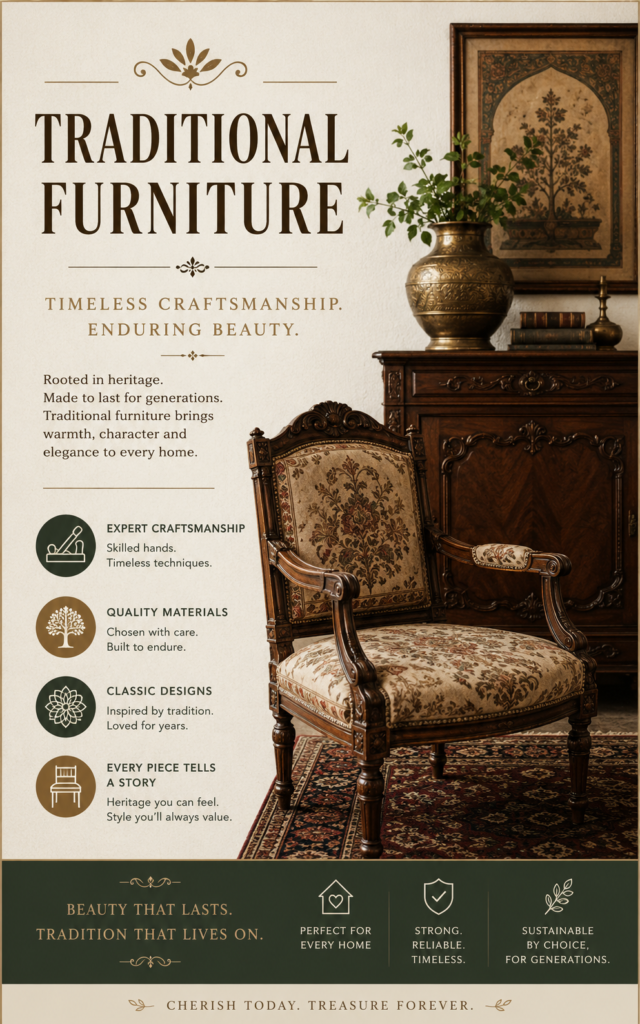
Traditional furniture has remained one of the most admired and enduring interior design choices for generations. While modern and contemporary designs continue evolving, traditional furniture consistently attracts homeowners who appreciate warmth, craftsmanship, sophistication, and timeless appeal.
Unlike trendy furniture styles that frequently change, traditional furniture offers a classic appearance that survives changing design trends. Rich wood finishes, elegant detailing, handcrafted designs, luxurious fabrics, and balanced proportions create a welcoming atmosphere that never feels outdated.
Whether decorating a large family home, upgrading a living room, designing a luxurious bedroom, or creating a classic dining space, traditional furniture delivers comfort and visual elegance.
This comprehensive guide explains everything you need to know about traditional furniture, including its history, characteristics, materials, benefits, decorating techniques, and purchasing advice.
What Is Traditional Furniture?
Traditional furniture refers to furniture inspired by classic European designs from the 18th and 19th centuries. It incorporates detailed craftsmanship, symmetrical shapes, rich textures, and elegant materials.
Traditional interiors often create a feeling of luxury and comfort through carefully designed pieces that emphasize quality over minimalism.
Common features include:
- Curved lines
- Ornamental details
- Rich wood finishes
- Handcrafted elements
- Neutral and warm colors
- Upholstered seating
- Decorative carvings
- Symmetrical arrangements
Traditional items values beauty and functionality equally.
History of Traditional Furniture
Traditional furniture has roots in historical design periods, including:
Victorian Style
Victorian furniture emerged during the reign of Queen Victoria and emphasized elegance, luxury, and decorative craftsmanship.
Characteristics include:
- Dark wood
- Heavy detailing
- Floral patterns
- Curved shapes
- Ornamental carvings
Georgian Style
Georgian furniture focused on symmetry and balanced proportions.
Key elements:
- Fine craftsmanship
- Decorative moldings
- Elegant curves
- Refined details
Colonial Style
Colonial furniture combined practicality with traditional aesthetics.
Common features:
- Solid wood construction
- Simpler carvings
- Functional design
- Natural materials
These historical influences continue shaping today’s traditional design collections.
Main Characteristics of Traditional Furniture
Elegant Curved Line
Furniture rarely uses sharp angles. Sofas, chairs, tables, and cabinets frequently include soft curves and flowing designs.
Curved elements create a welcoming appearance and increase visual interest.
Rich Wood Finishes
Wood is the defining material of traditional design.
Popular woods include:
- Oak
- Walnut
- Cherry
- Mahogany
- Maple
Dark finishes are particularly common because they add depth and sophistication.
Detailed Craftsmanship
Traditional design often features:
- Carved legs
- Decorative trim
- Moldings
- Inlays
- Hand-finished details
These elements make each piece feel unique.
Symmetrical Design
Traditional interiors rely heavily on balance.
Examples include:
- Matching side tables
- Paired lamps
- Identical chairs
- Centered focal points
Symmetry creates harmony and visual stability.
Warm Color Schemes
Traditional spaces commonly use:
- Cream
- Beige
- Brown
- Gold
- Burgundy
- Deep green
- Navy blue
Warm tones help create comfort and elegance.
Types of Traditional Furniture
Traditional Living Room Furniture
Living rooms often include:
Sofas and Loveseats
Traditional sofas typically feature:
- Rolled arms
- Tufted upholstery
- Decorative legs
- Premium fabrics
Coffee Tables
Classic coffee tables usually use:
- Solid wood
- Carved details
- Decorative bases
Accent Chairs
Traditional chairs frequently include:
- Floral upholstery
- Wood framing
- Curved arms
Traditional Bedroom Furniture
Bedroom furniture commonly includes:
- Sleigh beds
- Wooden headboards
- Dressers
- Nightstands
- Armoires
Traditional bedrooms emphasize comfort and luxury.
Traditional Dining Furniture
Dining rooms usually contain:
- Large wooden tables
- Upholstered dining chairs
- China cabinets
- Sideboards
Formal dining arrangements remain a key aspect of traditional design.
Traditional Office Furniture
Home offices can include:
- Executive desks
- Wooden bookshelves
- Leather chairs
- Filing cabinets
Traditional office spaces project professionalism and sophistication.
Popular Materials Used in Traditional Furniture
Solid Wood
Wood remains the most important material in furniture.
Benefits:
- Durability
- Strength
- Natural beauty
- Long lifespan
Leather
Leather furniture creates luxurious seating.
Common uses:
- Sofas
- Office chairs
- Accent chairs
Premium Fabrics
Popular fabrics include:
- Velvet
- Cotton
- Linen
- Silk blends
These fabrics improve both comfort and appearance.
Glass and Metal Accents
Although wood dominates, decorative glass and metal may be included for added elegance.
Examples:
- Brass handles
- Glass cabinet doors
- Metal trims
Benefits of Traditional Furniture
Timeless Appearance
Traditional items never goes out of style.
Unlike short-lived trends, classic designs remain visually appealing for decades.
Excellent Durability
High-quality traditional often uses strong materials and superior construction techniques.
Proper care allows pieces to last for generations.
Strong Investment Value
Well-crafted traditional frequently retains value over time.
Antique pieces may even appreciate in value.
Comfortable Living Spaces
Traditional interiors prioritize comfort.
Soft fabrics, upholstered seating, and warm colors create inviting spaces.
Increased Home Elegance
Traditional items immediately elevates room aesthetics.
Detailed craftsmanship creates a sophisticated atmosphere.
How to Decorate with Traditional Furniture
Choose a Focal Point
Every room should have a primary visual element.
Examples include:
- Fireplace
- Large sofa
- Dining table
- Bed
Arrange furniture around that focal point.
Use Layered Lighting
Traditional interiors benefit from multiple light sources.
Examples:
- Table lamps
- Floor lamps
- Chandeliers
- Wall sconces
Layered lighting creates warmth and depth.
Add Decorative Accessories
Traditional décor often includes:
- Framed artwork
- Decorative mirrors
- Table lamps
- Vases
- Rugs
Accessories add personality without overwhelming the room.
Include Rich Textures
Mix different textures for visual interest.
Examples:
- Wood
- Fabric
- Leather
- Glass
- Metal
Texture layering creates depth.
Maintain Balance
Avoid overcrowding spaces.
Traditional rooms should feel elegant rather than cluttered.
Traditional Furniture for Small Spaces
Many people assume quality furniture only works in large homes, but smaller spaces can also benefit.
Suggestions include:
Choose Smaller Pieces
Avoid oversized sofas and cabinets.
Instead use:
- Compact armchairs
- Narrow tables
- Smaller dressers
Use Mirrors
Mirrors create an illusion of larger space.
Select Light Colors
Lighter upholstery helps rooms appear bigger.
Examples:
- Cream
- Beige
- Soft gray
Keep Layout Open
Allow comfortable movement between furniture pieces.
Traditional Furniture Trends for Modern Homes
Modern homeowners increasingly combine furniture with contemporary design.
Popular combinations include:
Traditional + Modern
This style combines:
- Classic furniture
- Simple décor
- Neutral colors
- Contemporary accessories
Traditional + Rustic
Combining rustic elements creates warmth.
Examples:
- Natural wood
- Vintage accessories
- Stone textures
Traditional + Minimalist
Minimalist spaces with selected traditional pieces create balance.
Common Mistakes to Avoid
Overdecorating
Too many decorative pieces can create visual clutter.
Ignoring Scale
Large furniture in small rooms can overwhelm spaces.
Mixing Too Many Styles
Combining numerous design styles may create inconsistency.
Poor Lighting
Dark rooms reduce traditional furniture’s beauty.
Choosing Appearance Over Quality
Always prioritize construction quality.
How to Choose Quality Traditional Furniture
Before purchasing quality furniture, consider these factors:
Material Quality
Choose:
- Solid hardwood
- Quality upholstery
- Durable finishes
Construction
Look for:
- Strong joints
- Smooth finishes
- Sturdy frames
Comfort
Test seating before buying.
Beautiful furniture should also feel comfortable.
Color Compatibility
Choose colors that complement existing décor.
Budget
Quality furniture often costs more initially but saves money over time.
Caring for Traditional Furniture
Maintenance extends furniture lifespan.
Dust Regularly
Use soft cloths to prevent dust buildup.
Avoid Direct Sunlight
Excess sunlight may fade finishes and fabrics.
Protect Wooden Surfaces
Use:
- Coasters
- Table pads
- Protective mats
Clean Upholstery Carefully
Follow manufacturer recommendations.
Polish Wood Occasionally
Proper polishing helps preserve appearance.
Why Traditional Furniture Continues to Remain Popular
Traditional items has survived changing design trends because it delivers qualities homeowners consistently value:
- Beauty
- Comfort
- Durability
- Craftsmanship
- Timeless elegance
While design trends come and go, traditional interiors continue creating welcoming homes filled with character and sophistication.
Final Thoughts
Traditional furniture represents far more than decorative pieces placed in a room. It reflects history, artistry, and timeless style. Whether designing a living room, bedroom, dining area, or office, traditional furniture provides warmth and elegance that modern trends often struggle to match.
The beauty of traditional items lies in its ability to adapt while maintaining classic charm. By choosing quality materials, balanced layouts, and thoughtful accessories, homeowners can create inviting spaces that remain stylish for many years.