Timeless Elegance Meets Modern Luxury
Historic homes possess a charm that modern construction often struggles to replicate. From intricate moldings and handcrafted details to rich architectural character, these homes tell stories that span generations. However, preserving history while adapting a home to modern living requires thoughtful planning, creativity, and expert craftsmanship.
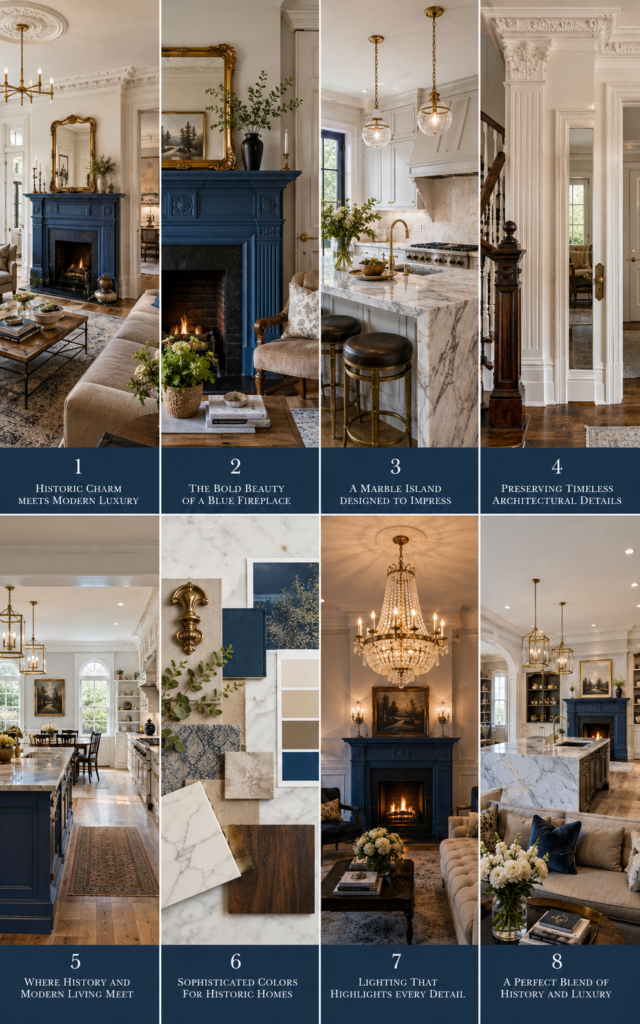
One remarkable example is a renovated historic home featuring a stunning blue fireplace and an impressive marble kitchen island. This extraordinary transformation blends classic architectural heritage with contemporary luxury, creating a living space that feels both timeless and current.
The renovation demonstrates how historic properties can be revitalized without sacrificing their original charm. By carefully restoring original features and introducing modern design elements, homeowners can create spaces that celebrate the past while embracing the future.
Whether you are planning your own renovation or simply seeking inspiration, this beautiful home offers valuable insights into modern historic home design.
The Growing Popularity of Historic Home Renovations
In recent years, historic home renovations have gained tremendous popularity among homeowners and interior designers alike.
Many people are drawn to older homes because of their unique craftsmanship, distinctive architectural details, and sense of authenticity. Unlike many contemporary properties, historic homes often feature:
- Original hardwood flooring
- Decorative moldings
- Tall ceilings
- Solid wood doors
- Handcrafted millwork
- Distinctive fireplaces
- Unique room layouts
Rather than demolishing these structures, homeowners are increasingly choosing to restore and modernize them.
The result is a home that offers the best of both worlds: historical character and modern comfort.
Preserving Historic Character During Renovation
One of the greatest challenges in renovating a historic home is maintaining its original character.
The success of this renovation lies in the careful preservation of key architectural elements. Instead of removing historical details, designers chose to highlight and restore them.
Important preserved features include:
Original Trim and Moldings
The intricate trim work throughout the home was carefully restored. Fresh paint and meticulous repairs brought new life to these architectural treasures.
Hardwood Floors
Original hardwood flooring was refinished to showcase its natural beauty. The restored floors add warmth and authenticity throughout the home.
Historic Windows
Whenever possible, original windows were repaired rather than replaced. This approach maintains the home’s historical integrity while improving energy efficiency.
Architectural Details
Arches, built-ins, decorative ceiling treatments, and vintage hardware were preserved to maintain the home’s historical identity.
The Stunning Blue Fireplace: A Bold Design Statement
The true centerpiece of the living area is the breathtaking blue fireplace.
Traditionally, fireplaces in historic homes feature neutral tones such as white, beige, or natural stone. This renovation takes a more daring approach by introducing a rich blue finish that instantly commands attention.
Why Blue Works So Well
Blue has become one of the most popular colors in modern interior design because it offers:
- Sophistication
- Depth
- Visual interest
- Timeless appeal
- Versatility
The carefully selected shade balances beautifully between classic and contemporary styles.
Creating a Focal Point
Every well-designed room needs a focal point.
The blue fireplace naturally draws the eye upon entering the space. Its vibrant color contrasts beautifully with neutral walls and surrounding architectural details.
The result is a dramatic centerpiece that feels intentional rather than overwhelming.
Pairing Blue with Historic Architecture
One reason the fireplace works so successfully is its relationship with the home’s historic features.
The blue finish enhances:
- Crown moldings
- Original mantel details
- Decorative trim
- Traditional furnishings
Rather than competing with historical elements, the fireplace complements them.
The Luxury of an Impressive Marble Kitchen Island
If the blue fireplace is the heart of the living room, the marble kitchen island is undoubtedly the star of the kitchen.
Modern homeowners increasingly view kitchens as gathering spaces rather than purely functional work areas. A large marble island serves as the perfect centerpiece for cooking, entertaining, and everyday living.
Why Marble Remains a Top Choice
Marble has long been associated with luxury and elegance.
Its enduring popularity stems from several advantages:
Natural Beauty
Every marble slab is unique.
Distinctive veining patterns create one-of-a-kind surfaces that instantly elevate a kitchen’s appearance.
Timeless Appeal
Unlike many design trends that fade over time, marble remains a classic choice that never goes out of style.
Increased Property Value
High-quality marble surfaces often increase a home’s resale value and appeal to prospective buyers.
Luxury Aesthetic
Few materials convey sophistication as effectively as marble.
The Design of the Marble Kitchen Island
The kitchen island in this renovated historic home is truly spectacular.
The oversized island provides ample space for:
- Meal preparation
- Casual dining
- Family gatherings
- Entertaining guests
- Home office tasks
Its dramatic waterfall edges showcase the marble’s natural veining, creating a seamless and luxurious appearance.
Combining Form and Function
A successful kitchen island must balance beauty and practicality.
This island includes:
- Hidden storage
- Seating space
- Integrated electrical outlets
- Durable finishes
- Functional workflow design
The result is a kitchen centerpiece that serves both aesthetic and practical purposes.
Modern Kitchen Features Within a Historic Home
One of the most impressive aspects of this renovation is how modern kitchen amenities blend effortlessly with historic architecture.
Custom Cabinetry
The kitchen features custom cabinets designed to complement the home’s original character.
Traditional profiles and elegant hardware maintain a sense of authenticity while providing modern storage solutions.
Professional-Grade Appliances
State-of-the-art appliances enhance functionality without dominating the room’s visual appeal.
Integrated appliances help preserve the kitchen’s cohesive design.
Open Layout
Many historic homes were originally built with smaller, compartmentalized rooms.
This renovation introduces a more open floor plan while respecting the home’s architectural integrity.
The result is a brighter, more spacious environment that better suits contemporary lifestyles.
Color Palette and Interior Design Harmony
The home’s overall color palette plays a critical role in its success.
The designers carefully selected colors that complement both the blue fireplace and marble kitchen island.
Neutral Foundations
Neutral tones provide balance throughout the home.
Popular choices include:
- Warm white
- Soft cream
- Light gray
- Beige
- Natural wood tones
These colors allow statement features to shine without overwhelming the space.
Strategic Accent Colors
The blue fireplace serves as the primary accent color.
Additional decorative elements subtly reinforce the color scheme through:
- Throw pillows
- Artwork
- Decorative accessories
- Area rugs
This creates visual continuity throughout the home.
Lighting That Enhances Architectural Beauty
Lighting is one of the most important aspects of any renovation.
This historic home utilizes layered lighting techniques to showcase both old and new features.
Natural Light
Large windows maximize daylight and highlight architectural details.
Natural light enhances:
- Marble surfaces
- Hardwood floors
- Decorative moldings
- Furniture textures
Statement Fixtures
Modern chandeliers and pendant lights provide visual interest while complementing the home’s historic character.
Accent Lighting
Carefully placed accent lighting highlights:
- Fireplace details
- Built-in shelving
- Artwork
- Architectural elements
Blending Old and New Successfully
The greatest achievement of this renovation is its seamless integration of historic and contemporary design.
Successful blending requires:
Respect for Original Architecture
Rather than removing historic features, the renovation celebrates them.
Strategic Modern Updates
Modern elements are introduced thoughtfully and intentionally.
Material Consistency
Natural materials such as wood, marble, and metal create harmony throughout the home.
Balanced Design
No single element overwhelms the overall aesthetic.
Instead, each feature contributes to a cohesive design story.
Benefits of Renovating Historic Homes
Homeowners considering a historic renovation can enjoy numerous advantages.
Unique Character
Historic homes offer architectural details rarely found in modern construction.
Sustainability
Renovating existing structures reduces waste and supports sustainable building practices.
Increased Home Value
Thoughtful renovations can significantly enhance property value.
Emotional Connection
Living in a historic home creates a meaningful connection to local history and architectural heritage.
Design Lessons from This Renovation
There are several valuable lessons homeowners can learn from this remarkable project.
Be Bold with Color
The blue fireplace demonstrates how strategic color choices can transform a space.
Invest in Quality Materials
The marble kitchen island highlights the importance of selecting durable, timeless materials.
Preserve Original Features
Historic details often become the most memorable aspects of a home.
Focus on Functionality
Beautiful spaces should also support everyday living.
Create Visual Focal Points
Strong focal points add personality and character to any interior.
Future Trends in Historic Home Design
This renovation reflects several emerging design trends.
These include:
- Statement fireplaces
- Large marble islands
- Mixed traditional and contemporary styles
- Sustainable restoration practices
- Personalized color palettes
- Natural materials
- Open-concept living spaces
As these trends continue to evolve, homeowners will increasingly seek ways to combine historic charm with modern luxury.
Conclusion
A renovated historic home with a blue fireplace and impressive marble kitchen island represents the perfect marriage of old-world charm and contemporary sophistication. Through thoughtful preservation, bold design choices, and careful attention to detail, this home successfully honors its architectural heritage while embracing modern living.
The striking blue fireplace serves as an unforgettable focal point, adding personality and depth to the living space. Meanwhile, the luxurious marble kitchen island transforms the kitchen into a functional and visually stunning gathering place.
Together, these features demonstrate how historic homes can be beautifully adapted for modern lifestyles without losing their unique character. For homeowners, designers, and renovation enthusiasts alike, this project serves as an inspiring example of how history, craftsmanship, and contemporary design can coexist in perfect harmony.