

In the world of high-end design, lighting is often referred to as the “Final Texture.” While marble counters and silk rugs provide the canvas, it is the luxury interior lighting guide that dictates how those materials are experienced. In 2026, the trend has shifted toward “Quiet Luxury”—an approach where lighting is deeply integrated, sculptural, and atmospheric. This ultimate guide will walk you through 10 designer secrets for achieving a stylish, residential lighting design that makes your home feel like a curated 5-star sanctuary.
Lighting Secret 01
Beyond Functional: Lighting as Art and Sculpture

The first rule of a **stylish interior lighting** plan is to view your fixtures as art. In 2026, the most trending homes feature sculptural pieces that define a room’s character even when the power is off. Whether it’s a hand-blown glass pendant or a brutalist brass chandelier, your main fixture shouldn’t just illuminate; it should inspire.
According to latest trends, “Napkin” and “Drapery” forms—fixtures that appear to flow like fabric—are the height of luxury. These organic silhouettes break the rigidity of modern architecture and introduce a sense of softness and movement to your space.
Key Sculptural Elements:
Lighting Secret 02
Mastering the Tri-Layering Methodology

A single “big light” is the fastest way to make an expensive home look flat and uninspired. Every professional **residential lighting design guide** emphasizes the importance of layering.
**Layer 1 — Ambient:** This is your foundation. Think invisible LED coves, recessed architectural downlights, or a large floor lamp. Its job is to provide safe, general movement light.
**Layer 2 — Task:** Focused and practical. A sleek reading sconce beside a light grey sofa or a directional pendant over a kitchen island.
**Layer 3 — Accent:** The magic layer. This includes picture lights for your art, LED strips inside shelving, and small “sparkle” lights that draw the eye toward architectural details like marble moldings.
The Secret Ratio: **50% Ambient, 30% Task, 20% Accent.** Use your accent lighting to create “pools of light” that add biological comfort and architectural depth.
Lighting Secret 03
Choosing the Best Indoor Lighting: The Kelvin Gold Standard

The “Best indoor lighting” is not just about the fixture; it is about the **color temperature**. In luxury design, anything above 3000K (cool white) is generally prohibited in living areas as it creates a clinical, “office” atmosphere.
For a high-end residential feel, stick to the **2400K–2700K** range. This “Incandescent Warm” tone replicates the golden hour of sunset, making skin tones look radiant and materials look rich.
Furthermore, always look for bulbs with a **High CRI (90+)**. Color Rendering Index (CRI) measures how accurately a light source reveals the true colors of your decor. Lower CRI bulbs will make your $10,000 marble table look grey and muddy.
What to Look For:
Lighting Secret 04
Room-by-Room Residential Lighting Guide

Every room in your home serves a different purpose, and your **room lighting guide** should reflect that. In 2026, the trend is “Human-Centric Lighting”—adapting the light to match your biological clock.
**The Master Suite:** Focus on symmetry. Use matching bedside pendants or wall-mounted sconces to create a balanced, luxurious look. For more expert tips on this, explore our comprehensive Hotel Bedroom Lighting Ideas guide.
**The Kitchen:** This is a task-heavy zone. Integrate high-output LED strips under every cabinet to eliminate shadows on your workspace. Use decorative pendants over the island as your “Art” layer.
**The Entryway:** This is your home’s first impression. A large-scale architectural fixture in the center of the hall communicates luxury instantly.
Lighting Secret 05
Architectural Integration: The “Invisible” Glow
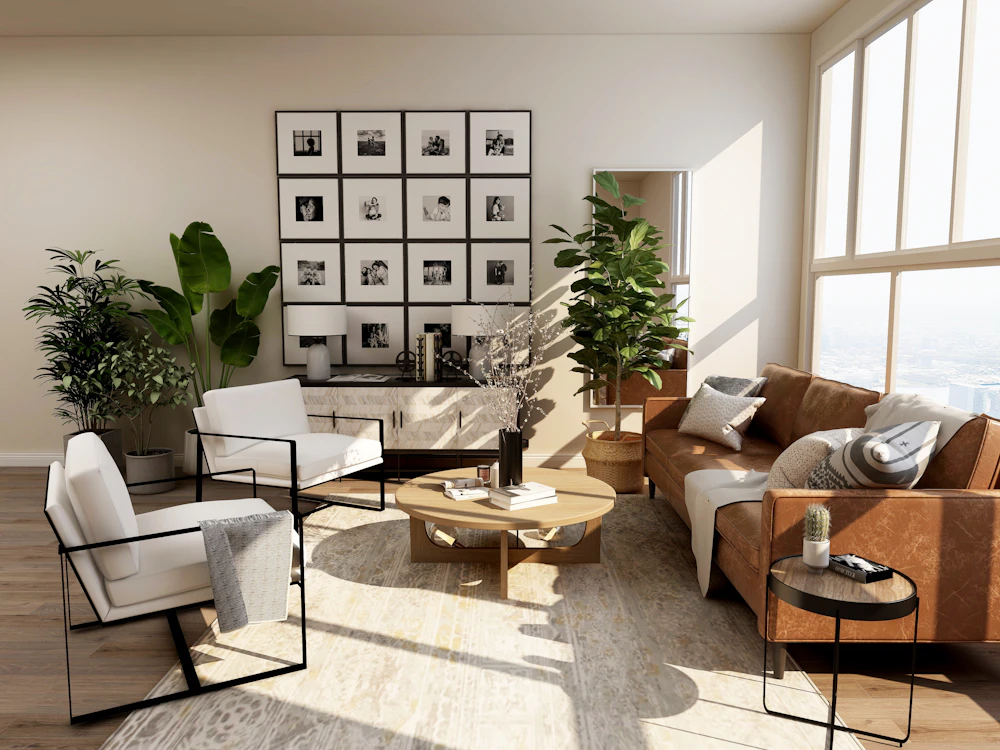
One of the most powerful **lighting effects in interior design** is the use of “Invisible” sources. This is where you see the light, but not the bulb.
Place LED strips in “Coves” (the gap between the wall and a dropped ceiling) or behind “Shadow Gaps” near baseboards. This creates an ethereal halo effect that makes furniture appear to hover. In high-end design, we use this to highlight expensive materials— grazing light across a textured stone wall or a marble backsplash reveals every beautiful detail that overhead light would flatten.
Modern Glow Locations:
Lighting Secret 06
Types of Lighting in the Living Room
The living room is the most versatile space in a home, and its lighting must follow suit. When considering the **types of lighting in living room** design, think about “Scenes.”
For a “Movie Night” scene, your accent lights (shelf LEDs and wall grazing) should be the only things active at 10% brightness. For a “Social Evening,” your sculptural chandelier should be at 40%, paired with warm table lamps nearby. This level of control is what separates a standard house from a luxury home.
- Symmetry: Place matching table lamps at both ends of your sofa for a polished look.
- Visual Weight: Ensure your floor lamps have substantial bases (marble or heavy ceramic) to anchor the room.
Lighting Secret 07
Small Space Luxury: Transforming Apartment Living
You don’t need a mansion to use a **luxury interior lighting guide**. In fact, lighting is the most effective tool for making compact spaces look vast. In small apartments, use “Vertical Uplighting.” By pointing light toward the ceiling from a floor lamp or a small uplighter behind a plant, you draw the eye upward, creating the illusion of height.
Avoid cluttering surfaces with many small lamps. Instead, invest in one large, impactful piece that serves as a focal point. Quality over quantity is the mantra of modern luxury.
The Final Check
The 10-Point Luxury Lighting Checklist
☐ Layer Ambient, Task, and Accent sources in all main rooms.
☐ Standardize your bulbs to a warm 2700K temperature.
☐ Ensure a High CRI (90+) for all visible light sources.
☐ Install dimmer switches or smart controls everywhere.
☐ Use LED strips to create an “Invisible” architectural glow.
☐ Address all dark corners with lamps or plant-uplighting.
☐ Position table lamps at seated eye level (approx. 60cm).
☐ Avoid visible bulbs; prioritize diffusion and indirect light.
☐ Create “Scenes” to adapt the lighting to your mood.
Common Errors
Luxury Lighting Mistakes to Avoid
-
Using “Cool White” in Social Zones. It kills the warm atmosphere and makes high-end finishes look cheap.
-
Ignoring Interior Shadows. A room that is evenly lit everywhere feels flat and commercial. Contrast is luxury.
-
Selecting Tiny Fixtures. Undersized chandeliers make a room feel cramped. Go bigger for a confident, high-end look.
-
Visible LED “Dots.” In 2026, naked LED strips are an error. Always use a diffuser profile for a smooth, continuous band of light.
Frequently Asked
Residential Lighting FAQ
What is the best lighting for a house?
The **best lighting for a house** is a layered approach using a warm 2700K color temperature. It should prioritize indirect sources, such as LED coves and floor lamps, over harsh overhead fixtures to create a comfortable, luxurious atmosphere.
Where can I find a luxury lighting guide for home design?
A comprehensive **lighting guide for home** design focuses on the three layers of light: Ambient, Task, and Accent. By balancing these three, you can highlight architectural features while maintaining functionality for daily tasks.
What are the key lighting effects in interior design?
Key **lighting effects in interior design** include ‘Wall Washing’ for smoothness, ‘Grazing’ to highlight textures like stone or marble, and ‘Spotlighting’ to draw attention to art or sculptural furniture.
How do I choose the best indoor lighting for a living room?
The **best indoor lighting** for a living room involves a mix of **types of lighting in living room** design: a statement chandelier, matching table lamps on console tables, and subtle LED strips in shelving for depth.
Where can I download a residential lighting design guide pdf?
While many resources offer an **importance of lighting in interior design pdf**, the most up-to-date luxury trends for 2026 are found in digital guides like this one, which account for the latest smart LED technologies and ‘Quiet Luxury’ aesthetics.
Final Thoughts: The Ultimate Luxury Experience
Achieving a 5-star look isn’t about the quantity of light; it’s about the **quality and control**. By following this **residential lighting design guide**, you transition from merely “lighting a room” to “designing an atmosphere.”
Start by auditing your bulb temperatures, then introduce the three layers of light. Remember: in luxury interiors, what you *don’t* light is just as important as what you do.