Multifunctional Furniture: Smart Solutions for Modern Homes
Modern homes are changing rapidly. Living spaces are becoming smaller, urban apartments are becoming more compact, and people want homes that provide comfort, functionality, and style without wasting space. This shift has created a growing demand for multifunctional furniture.
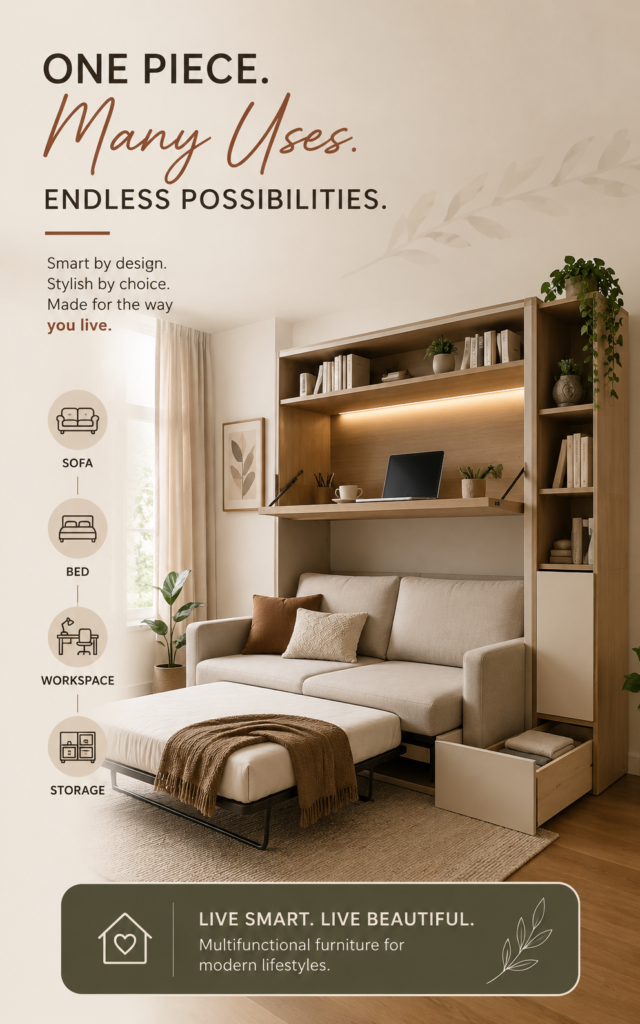
Multifunctional furniture combines practicality with design by serving multiple purposes in a single piece. Instead of filling a room with many separate items, homeowners can use furniture that adapts to different needs throughout the day.
From sofa beds and storage ottomans to expandable dining tables and foldable desks, multifunctional furniture is transforming how people design their homes. Whether you live in a small apartment, studio, family house, or modern office, these furniture solutions can improve space utilization and create a more organized environment.
This complete guide explores everything you need to know about multifunctional furniture, including its advantages, popular types, styling tips, buying considerations, and future trends.
What Is Multifunctional Furniture?
Multifunctional furniture refers to furniture designed to perform more than one function. Unlike traditional furniture pieces that serve only a single purpose, these innovative designs combine multiple features into one item.
Examples include:
- Beds with storage drawers underneath
- Sofa beds for seating and sleeping
- Foldable dining tables
- Coffee tables with hidden compartments
- Wall-mounted desks
- Modular shelving systems
- Expandable furniture
The goal is simple: maximize utility while minimizing space consumption.
As cities continue growing and homes become more compact, multifunctional furniture has become one of the most practical solutions in modern interior design.
Why Multifunctional Furniture Is Becoming Popular
Space Optimization
One of the biggest reasons for the popularity of multifunctional furniture is its ability to save space.
Traditional furniture can occupy a large portion of a room. Multifunctional pieces eliminate the need for multiple separate items.
For example:
A sofa bed acts as both a couch and a sleeping space.
A dining table with storage compartments provides eating space and organization.
A wall bed creates open floor space during the day.
This flexibility is especially valuable in apartments and small homes.
Cost Efficiency
Buying multiple furniture items can be expensive. Multifunctional furniture allows homeowners to invest in fewer pieces while still meeting multiple needs.
Instead of purchasing:
- A bed
- Storage unit
- Seating area
You might only need one smart furniture solution.
Over time, this can reduce furniture expenses significantly.
Improved Organization
Hidden storage is one of the most attractive features of multifunctional furniture.
Many designs include:
- Drawers
- Secret compartments
- Shelves
- Lift-up storage sections
These storage options help reduce clutter and maintain cleaner living spaces.
Modern Design Appeal
Today’s multifunctional furniture is designed with aesthetics in mind.
Manufacturers combine:
- Minimalist designs
- Premium materials
- Modern finishes
- Elegant textures
This means functionality no longer comes at the expense of appearance.
Types of Multifunctional Furniture
Sofa Beds
Sofa beds remain among the most popular multifunctional furniture choices.
Benefits include:
- Dual seating and sleeping functionality
- Space efficiency
- Guest accommodation
- Stylish appearance
Modern sofa beds are significantly more comfortable than older designs and come in numerous styles.
Storage Beds
Storage beds combine sleeping space with built-in storage compartments.
Storage options often include:
- Under-bed drawers
- Hydraulic lift systems
- Side shelves
- Hidden compartments
These are excellent for storing:
- Clothing
- Blankets
- Shoes
- Seasonal items
Foldable Dining Tables
Dining tables can occupy substantial room space.
Foldable versions can:
- Expand during meals
- Fold away after use
- Fit smaller rooms
These tables are perfect for apartments and compact homes.
Expandable Tables
Expandable tables provide flexibility for changing needs.
Benefits include:
- Additional seating for guests
- Adjustable size
- Better space management
They are especially useful for family gatherings.
Wall-Mounted Desks
Remote work has increased demand for home office furniture.
Wall-mounted desks:
- Fold when not in use
- Save floor space
- Create dedicated work zones
These solutions work particularly well in bedrooms and studio apartments.
Storage Ottomans
Storage ottomans serve multiple purposes:
- Footrest
- Seating
- Storage
- Decorative element
Their versatility makes them highly practical.
Modular Furniture Systems
Modular systems allow homeowners to customize layouts according to changing needs.
Components can often be rearranged into:
- Shelving systems
- Seating arrangements
- Storage units
- Workspaces
Multifunctional Furniture for Small Spaces
Small homes require strategic furniture choices.
Studio Apartments
Studio apartments benefit greatly from:
- Murphy beds
- Sofa beds
- Foldable desks
- Storage benches
These solutions maximize limited square footage.
Tiny Homes
Tiny homes prioritize efficient use of every inch.
Common multifunctional furniture in tiny homes includes:
- Staircase storage
- Convertible beds
- Hidden kitchen tables
- Built-in seating
Small Bedrooms
For compact bedrooms, useful choices include:
- Bed frames with drawers
- Floating desks
- Storage headboards
- Foldable wardrobes
Small Living Rooms
Living rooms can feel larger with:
- Nesting tables
- Storage coffee tables
- Modular sofas
- Wall-mounted shelving
How Multifunctional Furniture Improves Home Design
Furniture influences more than functionality—it also shapes aesthetics.
Multifunctional furniture improves design by:
Creating Open Spaces
Large furniture pieces often create visual clutter.
Multifunctional solutions reduce unnecessary items and create cleaner layouts.
Supporting Minimalism
Minimalist design emphasizes simplicity and intentional living.
Multifunctional furniture aligns perfectly with these principles.
Enhancing Visual Balance
Smart furniture creates:
- Better proportions
- Improved room flow
- Cleaner layouts
Increasing Flexibility
Rooms can transform quickly.
For example:
A home office during the day can become a guest room at night.
Materials Used in Multifunctional Furniture
The quality of materials significantly affects durability and appearance.
Popular materials include:
Solid Wood
Advantages:
- Long lifespan
- Natural appearance
- Strong structure
Engineered Wood
Benefits include:
- Lower cost
- Versatility
- Modern finishes
Metal Frames
Metal provides:
- Strength
- Contemporary style
- Durability
Upholstered Materials
Common options include:
- Linen
- Velvet
- Leather
- Polyester blends
Glass Components
Glass is frequently used for:
- Tables
- Shelving
- Decorative elements
Buying Guide for Multifunctional Furniture
Before purchasing, consider these factors.
Measure Available Space
Always measure:
- Width
- Height
- Depth
- Clearance area
Furniture should fit comfortably without restricting movement.
Understand Your Needs
Ask yourself:
- Do you need storage?
- Do you host guests?
- Do you work from home?
- Do you need flexibility?
Your lifestyle determines the right furniture choice.
Check Weight Capacity
Convertible furniture often includes moving parts.
Ensure:
- Structural stability
- Strong frames
- Quality mechanisms
Examine Storage Options
Storage designs differ greatly.
Consider:
- Accessibility
- Size
- Organization
Prioritize Quality
Cheap furniture may create problems later.
Focus on:
- Durable materials
- Reliable mechanisms
- Positive customer reviews
Styling Tips for Multifunctional Furniture
Practical furniture should still look attractive.
Maintain Color Consistency
Choose colors that complement the room.
Popular modern colors include:
- White
- Gray
- Beige
- Black
- Earth tones
Add Decorative Accessories
Enhance furniture with:
- Throw pillows
- Rugs
- Decorative lighting
- Plants
Avoid Overcrowding
Even with multifunctional furniture, avoid excessive decoration.
Minimal clutter creates cleaner spaces.
Create Zones
Use furniture to separate spaces visually.
Examples include:
- Living area
- Workspace
- Dining area
Future Trends in Multifunctional Furniture
Furniture innovation continues evolving.
Emerging trends include:
Smart Furniture Technology
Technology integration is increasing.
Examples:
- Wireless charging
- Built-in speakers
- USB ports
- smart lighting
Sustainable Furniture
Eco-friendly materials are becoming more popular.
Manufacturers are using:
- Recycled wood
- Bamboo
- Sustainable fabrics
Custom Modular Systems
Consumers increasingly prefer personalized furniture configurations.
AI-Assisted Furniture Design
Future furniture may adapt automatically based on user behavior and room conditions.
Common Mistakes to Avoid
Many homeowners make avoidable mistakes when buying multifunctional furniture.
Avoid:
Ignoring Measurements
Improper measurements can create space issues.
Choosing Style Over Function
Beautiful furniture should also meet practical needs.
Buying Low-Quality Mechanisms
Moving parts require strong engineering.
Overloading Storage
Excessive weight can reduce durability.
Final Thoughts
Multifunctional furniture is more than a design trend. It represents a practical response to modern living challenges.
As homes become smaller and lifestyles become more dynamic, furniture that serves multiple purposes offers tremendous value. Whether you want to save space, reduce clutter, improve organization, or create stylish interiors, multifunctional furnitures provides an effective solution.
From sofa beds and storage beds to expandable tables and modular systems, smart furniture transforms homes into flexible environments that adapt to changing needs.
Investing in quality multifunctional furniture can create a cleaner, more comfortable, and more efficient living space for years to come.