Traditional Home Office Design: Creating a Timeless Workspace for Productivity and Elegance
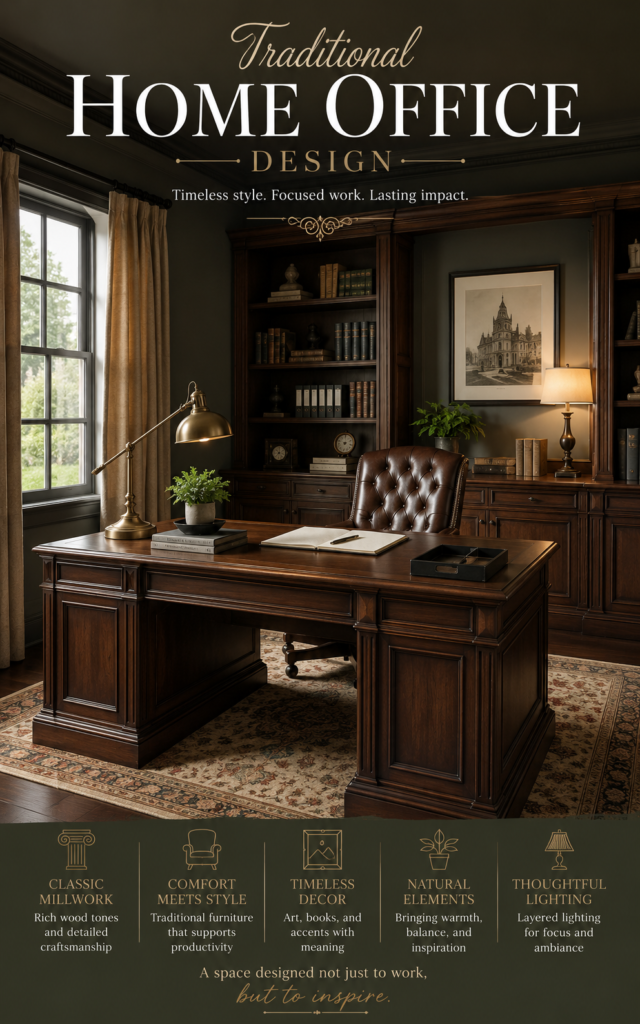
In an era dominated by modern and minimalist interiors, traditional home office design continues to stand out as a symbol of sophistication, comfort, and professionalism. A traditional office provides more than just a place to work—it creates an environment that inspires focus, organization, and long-term productivity.
Whether you work remotely, run a business from home, or simply need a dedicated study area, a traditional home office offers the perfect blend of functionality and timeless beauty. Rich wood furniture, elegant detailing, classic décor, and carefully selected accessories work together to create a workspace that feels both luxurious and welcoming.
This comprehensive guide explores everything you need to know about traditional home office design, from furniture selection and layout planning to color palettes, lighting, storage solutions, and decorating ideas.
Why Traditional Home Office Design Remains Popular
Traditional interiors have remained relevant for generations because they emphasize craftsmanship, durability, and timeless aesthetics. Unlike trendy designs that may quickly become outdated, traditional offices maintain their appeal year after year.
Benefits include:
- Professional appearance
- Timeless elegance
- Comfortable working environment
- High-quality furniture investment
- Enhanced productivity
- Strong organizational structure
- Warm and welcoming atmosphere
Many professionals choose traditional home office design because it communicates authority, reliability, and sophistication while remaining highly functional.
Key Characteristics of Traditional Home Office Design
A traditional home office typically includes several defining elements that distinguish it from modern or contemporary spaces.
Rich Wood Furniture
Wood is the foundation of traditional office design. Common wood finishes include:
- Mahogany
- Cherry
- Walnut
- Oak
- Maple
These materials add warmth, character, and a sense of permanence to the workspace.
Symmetrical Layout
Traditional interiors often emphasize balance and symmetry. Furniture placement is typically organized and structured, creating visual harmony throughout the room.
Detailed Craftsmanship
Traditional office furniture frequently features:
- Carved moldings
- Decorative legs
- Raised panel details
- Crown molding
- Brass hardware
These details contribute to the room’s refined appearance.
Elegant Color Schemes
Traditional spaces typically rely on rich, sophisticated colors rather than bright or overly trendy tones.
Popular choices include:
- Deep brown
- Cream
- Beige
- Navy blue
- Forest green
- Burgundy
- Warm gray
Choosing the Perfect Location
The success of your traditional home office begins with selecting the right location.
Ideal options include:
- Spare bedrooms
- Dedicated office rooms
- Library spaces
- Finished basements
- Quiet corners with natural light
A private room is preferable because traditional offices are designed to create a focused and professional atmosphere.
Traditional Home Office Layout Ideas
Executive Office Layout
This layout features:
- Large executive desk
- Matching bookcases
- Leather seating
- Central focal point
It works particularly well for larger rooms.
Library-Inspired Layout
A library-style office creates a scholarly and sophisticated environment.
Features include:
- Floor-to-ceiling bookshelves
- Reading chair
- Built-in storage
- Warm lighting
This setup is ideal for writers, researchers, and professionals who handle extensive paperwork.
Corner Office Layout
Smaller homes can still achieve a traditional look by utilizing corner spaces.
Include:
- Compact wooden desk
- Wall shelving
- Traditional desk lamp
- Decorative accessories
Selecting Traditional Office Furniture
Furniture is the centerpiece of traditional home office design.
Executive Desk
The desk should serve as the room’s primary focal point.
Popular choices include:
- Pedestal desks
- Partner desks
- Roll-top desks
- Executive desks
Look for solid wood construction and timeless detailing.
Leather Office Chair
A high-quality leather chair combines comfort and sophistication.
Popular colors include:
- Brown
- Black
- Burgundy
- Dark green
Tufted leather chairs work exceptionally well in traditional settings.
Wooden Bookcases
Bookcases provide both functionality and visual appeal.
Consider:
- Built-in shelving
- Glass-front cabinets
- Floor-to-ceiling bookcases
- Matching wood finishes
Storage Cabinets
Traditional offices emphasize organization.
Storage options include:
- Filing cabinets
- Credenzas
- Sideboards
- Wooden storage chests
Best Color Schemes for Traditional Home Offices
Color plays a major role in establishing the mood of the workspace.
Rich Brown and Cream
This classic combination creates warmth and elegance.
Navy Blue and White
A sophisticated pairing that enhances professionalism.
Forest Green and Walnut
Perfect for library-inspired office designs.
Beige and Dark Wood
A timeless combination suitable for virtually any home.
Burgundy and Gold
Ideal for luxurious executive offices.
Traditional Wall Design Ideas
Walls contribute significantly to the overall character of a traditional office.
Wood Paneling
Wood paneling instantly creates a distinguished and professional atmosphere.
Benefits include:
- Visual warmth
- Sound absorption
- Timeless appeal
Wallpaper
Traditional wallpaper patterns often feature:
- Damask prints
- Floral motifs
- Textured finishes
- Striped designs
Crown Molding
Decorative molding adds architectural character and elevates the room’s appearance.
Gallery Walls
Frame:
- Certificates
- Family photos
- Historical prints
- Classic artwork
Flooring Options for Traditional Offices
The right flooring enhances both aesthetics and functionality.
Hardwood Flooring
Hardwood remains the most popular choice.
Options include:
- Oak
- Walnut
- Cherry
- Maple
Persian Rugs
Traditional rugs add comfort and visual richness.
Benefits include:
- Noise reduction
- Added texture
- Enhanced luxury
Area Rugs
Large area rugs help define the workspace while protecting flooring.
Lighting for Traditional Home Office Design
Proper lighting improves productivity and comfort.
Natural Light
Maximize natural light whenever possible.
Benefits include:
- Reduced eye strain
- Better mood
- Increased productivity
Traditional Chandeliers
A chandelier serves as a stylish focal point.
Popular finishes:
- Brass
- Bronze
- Antique gold
Desk Lamps
Traditional desk lamps often feature:
- Brass accents
- Green glass shades
- Adjustable arms
Wall Sconces
Wall sconces provide ambient lighting while enhancing architectural details.
Window Treatments
Traditional window coverings contribute to the room’s elegant appearance.
Draperies
Rich fabrics such as:
- Velvet
- Linen
- Silk blends
Create a luxurious feel.
Roman Shades
Roman shades offer a refined and practical solution.
Wooden Blinds
Wood blinds complement traditional furniture beautifully.
Traditional Home Office Storage Solutions
Storage is essential for maintaining an organized workspace.
Built-In Cabinets
Built-ins maximize storage while maintaining a cohesive appearance.
Filing Systems
Traditional filing cabinets help organize documents efficiently.
Display Shelves
Use display shelves for:
- Books
- Awards
- Collectibles
- Decorative accents
Decorative Accessories
Accessories personalize the office and enhance its traditional character.
Classic Artwork
Popular choices include:
- Landscapes
- Historical prints
- Architectural sketches
- Oil paintings
Decorative Clocks
A traditional wall clock adds both functionality and charm.
Globes
Vintage-style globes are iconic office accessories.
Sculptures
Small sculptures and decorative objects add sophistication.
Creating a Traditional Executive Office
An executive office focuses on authority and professionalism.
Essential elements include:
- Large mahogany desk
- Leather executive chair
- Matching bookcases
- Statement lighting
- Premium décor accessories
The goal is to create an environment that reflects confidence and success.
Traditional Home Office Design for Small Spaces
Even compact rooms can embrace traditional style.
Tips include:
Choose Multi-Functional Furniture
Select desks with built-in storage.
Use Vertical Storage
Install tall bookshelves to maximize wall space.
Keep Color Schemes Light
Lighter tones make small offices appear larger.
Add Mirrors
Mirrors enhance light and create visual depth.
Blending Technology with Traditional Design
Modern technology can seamlessly integrate into traditional interiors.
Strategies include:
- Hidden cable management
- Built-in charging stations
- Concealed printers
- Wireless accessories
- Smart lighting systems
This approach preserves the room’s classic appearance while supporting modern work needs.
Traditional Home Office Design Trends
Current trends include:
Dark Wood Revival
Rich wood tones are making a strong comeback.
Built-In Libraries
Homeowners increasingly favor custom bookcases.
Heritage-Inspired Furniture
Vintage and antique-inspired pieces remain highly desirable.
Layered Lighting
Combining ambient, task, and accent lighting creates a sophisticated atmosphere.
Luxury Textures
Materials such as leather, velvet, and brass continue to dominate traditional office design.
Common Mistakes to Avoid
Avoid these common design errors:
Overcrowding the Room
Too much furniture reduces functionality.
Poor Lighting
Insufficient lighting affects productivity.
Ignoring Ergonomics
Comfort should never be sacrificed for aesthetics.
Mixing Too Many Styles
Maintain a cohesive traditional theme.
Neglecting Storage
Clutter undermines the elegance of the space.
Budget-Friendly Traditional Home Office Ideas
You don’t need an unlimited budget to achieve a traditional look.
Consider:
- Refinishing existing furniture
- Shopping antique markets
- Using reproduction furniture
- Installing peel-and-stick wallpaper
- Adding affordable traditional accessories
Small upgrades can create a significant visual impact.
Final Thoughts
Traditional home office design remains one of the most elegant and practical approaches to creating a productive workspace. By incorporating classic furniture, rich wood finishes, sophisticated colors, thoughtful lighting, and timeless décor, homeowners can build an office that combines beauty, comfort, and functionality.
Whether you are designing a grand executive office or a compact study corner, traditional style offers lasting appeal that never goes out of fashion. Investing in quality materials and classic design principles ensures your workspace will continue to inspire productivity and professionalism for years to come.